Table of Contents
Introduction
The human body has muscles surrounding and protecting the spine to prevent pain and disability. The spine is divided into three sections in the body: cervical, thoracic, and lumbar, which form an S-shape curve to promote stability and good posture. The spine has several discs, facet joints, and spinal nerves that work with the surrounding muscles, making the body mobile. However, various factors can pressure the spine, compressing the spinal discs and invoking referred pain to the surrounding muscles and tissues in different locations, leading to overlapping risk profiles if left untreated. This article focuses on the lumbar spine, explaining what vertebral pain syndrome is and how non-surgical treatments such as spinal decompression can restore mobility to the lumbar spine. We utilize and incorporate valuable information about our patients to certified medical providers using non-surgical therapies like spinal decompression to alleviate vertebral pain syndrome associated with the lumbar spine. We encourage while referring patients to associated medical providers based on their findings while supporting that education is a remarkable tool to ask our providers the essential questions at the patient’s request. Dr. Jimenez, D.C., comprises this information as an educational service. Disclaimer
An Overview Of the Lumbar Spine
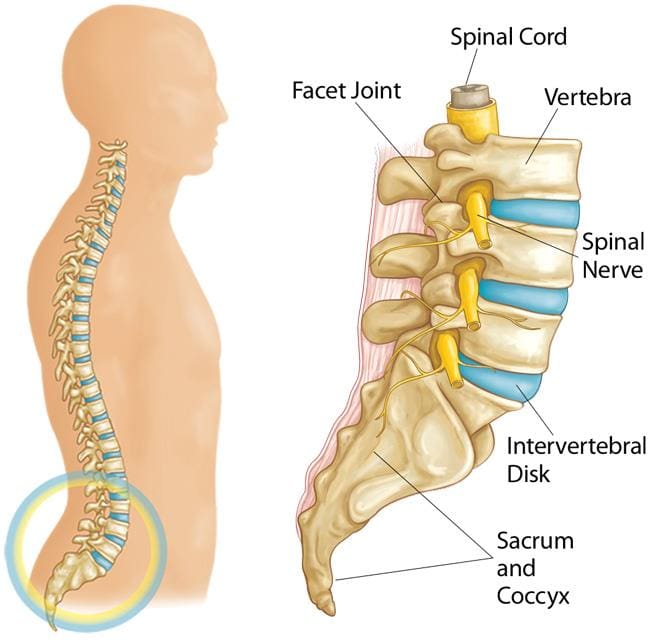
We will concentrate on the lumbar spine, one of the three spine sections. The lumbar spine or low back begins at the T12 (the last thoracic vertebra) and ends at the S1 (the sacrum). It comprises five vertebrae with a common structure supporting the low back. These vertebrae are as follows:
- The body
- Pedicles
- Laminae
- Transverse processes
- Spinous process
- Superior/inferior articular processes
The lumbar spine has bigger and stronger bones that provide stability to the upper and lower parts of the body. Research studies reveal that the lumbar spine performs three essential functions that enable the body to function properly:
- It supports the upper body.
- It absorbs axial forces that move from the head to the trunk. This allows the muscles in the trunk to move without causing pain.
- The lumbar spine forms a canal that safeguards the spinal cord and nerves.
The Structures Of the Lumbar Spine
The spine comprises several structures, including the vertebrae, spinal cord, spinal nerves, facet joints, and intervertebral discs. Each structure plays a unique role in keeping our bodies functioning properly. The vertebrae protect the spinal cord and nerves from injury, while the facet joints guide the motion of the vertebrae and help maintain stability. The spinal cord and nerves work with the central nervous system to send signals from the brain to the body for coordinating reflex actions. Intervertebral discs act as shock absorbers, allowing the spine to be flexible. Muscles, tissues, and ligaments protect the entire lumbar spine structure from pain. However, traumatic injuries or unwanted pressures can cause misalignment and low back pain. Low back pain is a common musculoskeletal complaint, and several factors can contribute to its development, often confused with vertebral pain syndrome associated with the lumbar spine, as research studies reveal.
Move Better, Live Better- Video
Do you have stiffness in your lower back or experience constant aches in certain regions? These may be signs of low back pain related to vertebral pain syndrome. Research shows that pathologic degeneration in the lumbar spine can cause low back pain, affecting all components. Several mechanical, traumatic, nutritional, and genetic factors contribute to spinal degeneration. However, non-surgical treatments can help reduce muscle pain and alleviate unwanted pressure on spinal discs. Chiropractic care and spinal decompression are two treatments that enhance mobility and function in the spine, relieving pain. The video above talks more about these treatments.
What Is Vertebral Pain Syndrome?
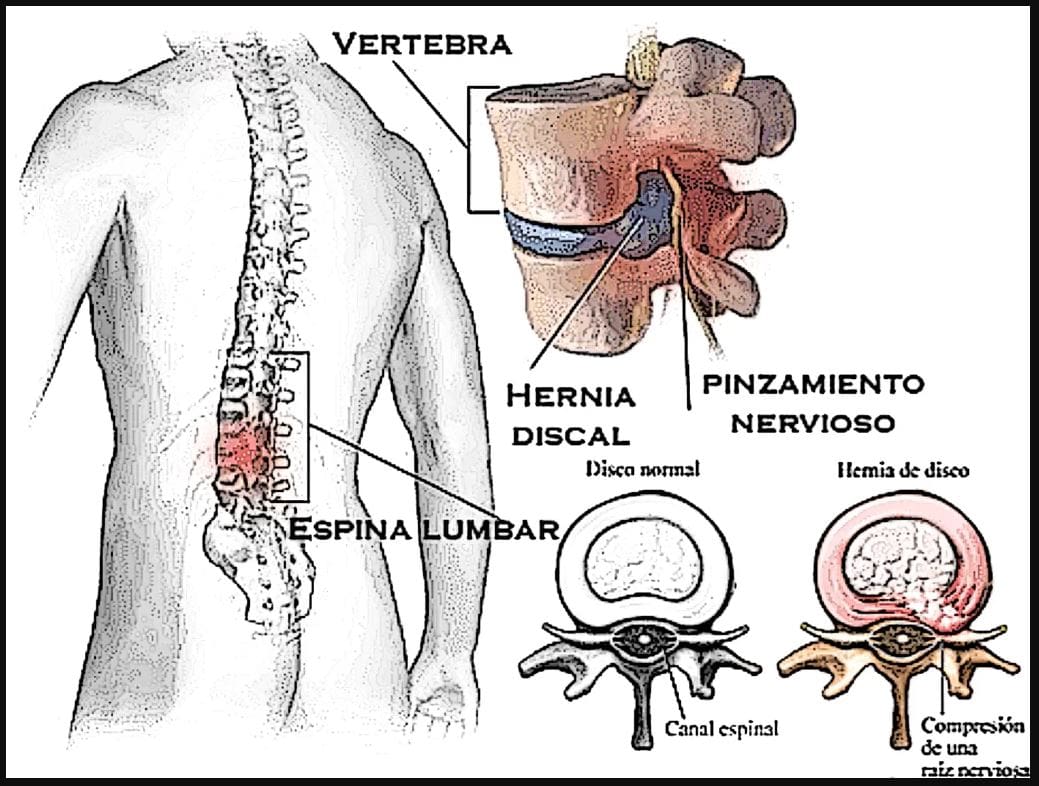
Experiencing pressure on the lumbar spine can result in various issues that can worsen low back pain. One of these issues is called vertebral pain syndrome. In “The Ultimate Spinal Decompression,” Dr. Eric Kaplan, D.C., FIAMA, and Dr. Perry Bard, D.C., explain that this syndrome occurs when environmental factors start affecting the lumbar spine. It can be caused by visceral pain in the lower back that disrupts neuron signals in the lumbar spine. This can irritate spinal nerves, leading to referred pain in the lower body. The book also mentions that vertebral pain syndrome can happen when the vertebrae end plates on spinal discs wear thin, causing pressure to move with the disc. This can inflame the spine, causing chronic low back pain.
How Spinal Decompression Alleviate Vertebral Pain Syndrome
How can non-surgical spinal decompression treatments help alleviate vertebral pain syndrome in the lumbar spine? Research studies revealed that spinal decompression could reduce pressure on the spinal disc and gently stretch the spine, restoring disc height. This treatment can relieve many people from low back pain and its associated symptoms. Moreover, it can rehydrate spinal discs by promoting the flow of blood and nutrients, which aids in the healing process to reduce the effects of vertebral pain syndrome.
Conclusion
Taking care of your spine is crucial as everyday factors can put pressure on it, causing damage to the spinal discs. This can lead to vertebral pain syndrome, which can cause lumbar back pain and referred pain linked to visceral problems. Luckily, spinal decompression therapy can ease the effects of this syndrome by gently stretching the spine and restoring hydration to the discs. Incorporating spinal decompression into your routine allows you to enjoy a pain-free life without worrying about lower back pain.
References
Alexander, C. E., & Varacallo, M. (2020). Lumbosacral Radiculopathy. PubMed; StatPearls Publishing. https://www.ncbi.nlm.nih.gov/books/NBK430837/
Kang, J.-I., Jeong, D.-K., & Choi, H. (2016). Effect of spinal decompression on the lumbar muscle activity and disk height in patients with herniated intervertebral disk. Journal of Physical Therapy Science, 28(11), 3125–3130. https://doi.org/10.1589/jpts.28.3125
Kaplan, E. & Bard, P. (2023). The Ultimate Spinal Decompression. JETLAUNCH.
Manfrè, L., & Van Goethem, J. (2020). Low Back Pain (J. Hodler, R. A. Kubik-Huch, & G. K. von Schulthess, Eds.). PubMed; Springer. https://www.ncbi.nlm.nih.gov/books/NBK554336/
Sassack, B., & Carrier, J. D. (2020). Anatomy, Back, Lumbar Spine. PubMed; StatPearls Publishing. https://www.ncbi.nlm.nih.gov/books/NBK557616/