Learn about restorative injection therapy for musculoskeletal pain and how it can support your healing journey.
Table of Contents
Abstract Introduction
As a clinician deeply engaged with musculoskeletal medicine, integrative rehabilitation, and regenerative therapeutics, I routinely navigate the practical and physiologic nuances of tendon injuries—particularly Achilles tendinopathy. This educational post synthesizes my clinical observations shared through HealthVoice360 and integrates the latest findings from leading researchers using modern, evidence-based methodologies. In a first-person narrative, I will unpack why carefully staged immobilization, structured loading, and regenerative interventions such as prolotherapy (hypertonic dextrose) can play complementary roles in restoring tendon health. I will clarify when a boot is indicated, why dosing and timing matter, how mechanotransduction and matrix remodeling shape outcomes, and how we fine-tune pain modulation without sacrificing long-term tendon integrity.
We will begin with the clinical scenario: a patient with Achilles tendon pain asking whether it is “still beneficial to do it” (referring to treatment) and whether immobilization must be enforced between spaced visits. I will explain why, in certain phases, a short boot protocol is appropriate—especially when flare-ups, partial tearing risk, or severe insertional pathology is present—and why intermittent immobilization paired with progressive loading can protect vulnerable tissue while maintaining proprioception and circulation. I will outline safety considerations for occupation-driven constraints (e.g., truck drivers) and how we modify plans to sustain adherence while minimizing risk.
From there, we will detail prolotherapy: what it is, why we use hypertonic dextrose mixed with buffered local anesthetic, and how this approach leverages controlled inflammatory signaling to stimulate tenocyte activity, collagen synthesis, and extracellular matrix repair. I will draw from evidence that dextrose solutions can modulate nociceptive pathways, normalize neurogenic inflammation, and enhance ligament and tendon stability over time. We will examine dosing, concentration selection (commonly 12.5%–25% dextrose for peritendinous applications; 50% is typically reserved for focal enthesial areas or specific protocols with caution), technique, targeting, and post-injection care. I will clarify the differences between paratenon injections, peritendinous approaches, tendon-sheath exposure risks, and why intratendinous injections are generally avoided in degenerative Achilles tissue unless specifically indicated with strict protocol and guidance.
Because tendon biology is slow and stubborn, our methods must respect time: collagen I turnover rates, glycosaminoglycan balance, MMP/TIMP regulation, elastin content, and vascular changes drive the clinical arc from pain to performance. We will walk through mechanobiology—how eccentric loading reorganizes collagen, how isometrics dampen pain through cortical mechanisms, and why tempo and excursion matter. We will incorporate load progression algorithms, patient-reported outcomes, ultrasound and elastography assessments, and red flags that shift our approach toward imaging, alternative therapies, or surgical consultation.
Lastly, I will contextualize everything through my clinical lens: how we stratify patients by symptom duration, tissue quality, systemic influences (metabolic syndrome, hypothyroidism, fluoroquinolone exposure), and occupational demands; how we negotiate the practicalities of wearing a boot; and how we integrate mobility, soft-tissue work, shockwave therapy, and nutritional support. At the end, you will find references, keywords, and a comprehensive summary, conclusion, and key insights dated precisely to ensure clarity and timeliness. The aim is to present a transparent, grounded, and compassionate approach that respects evidence, values patient experience, and prioritizes safety, function, and durable outcomes.
Achilles Tendinopathy Clinical Foundations — Why Immobilization and Prolotherapy May Work Together
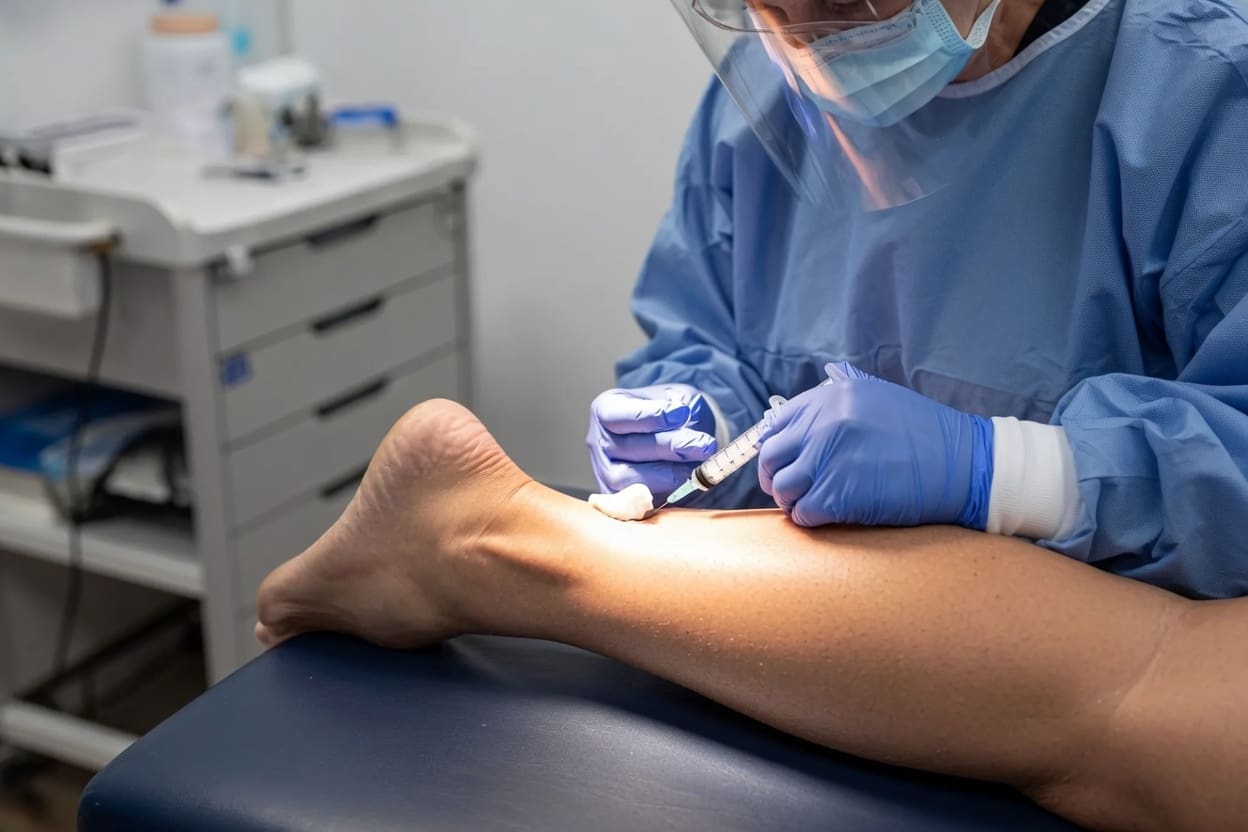
In my practice, I often encounter a straightforward but critical question: “Is it still beneficial to do it?”—meaning, is it worth proceeding with a planned treatment when symptoms are variable, appointments are spaced out, or life/work constraints complicate adherence? With Achilles tendinopathy, the answer depends on the phase of tissue distress, mechanical load history, and the integrity of the paratenon and enthesis.
- The Achilles tendon is primarily composed of Type I collagen organized in hierarchical fascicles, with a paratenon that supports gliding and vascular supply. Tendinopathy involves degenerative changes (mucoid degeneration, disorganized collagen, neovascularization, increased proteoglycans), often with reactive hypercellularity without overt inflammation by classic markers. Yet, clinically, there is a painful neurogenic inflammatory component and altered nociception.
- Boot immobilization is occasionally justified during an acute flare or after an injection to protect a compromised tendon from sudden tensile loads. When a patient plans biweekly visits, wearing a boot during the first week can reduce microfailure risk while facilitating controlled early healing. Removing the boot in week two allows careful reintroduction of load and proprioceptive input, which is essential for tendon remodeling.
- Prolotherapy—specifically hypertonic dextrose solutions—aims to initiate a controlled inflammatory stimulus in peritendinous tissues, promoting tenocyte activation, growth factor release, and collagen synthesis. While “Dextrose fifty percent mixed with lidocaine two percent” is mentioned colloquially, a nuanced approach to concentration is vital, with peritendinous applications more commonly in the 5%–25% range; higher concentrations can be used in targeted areas with caution. The lidocaine provides procedural analgesia and may reduce immediate discomfort without impeding the desired biologic response.
In practical terms: If a patient asks, “Who are we injecting?” the answer is grounded in clinical triage—identify whether the paratenon, peritendinous tissues, or enthesis is the target and whether the tendon midsubstance is degenerate. This dictates needle placement, volume, and concentration.
Evidence-Based Rationale for Short-Term Boot Use in Achilles Tendinopathy
- Why a boot? Short-term immobilization decreases peak strain and shear across a vulnerable tendon. In early reactive tendinopathy or post-procedure periods, this can limit sudden microtears and help modulate pain by reducing provocative stretch.
- Timing: A boot for about one week immediately after an intervention can help stabilize tissue. Extended immobilization beyond 2–3 weeks risks muscle atrophy, stiffness, and proprioceptive dampening. Intermittent boot use is sometimes indicated in occupations with unpredictable loads (e.g., truck drivers) to buffer unexpected steps or jolts.
- Alternating phases: I instruct patients to use the boot as prescribed in the first week, then transition to graded loading in the second week, returning to clinic for reassessment and potentially briefly re-applying immobilization after subsequent injections or during symptomatic setbacks.
- Clinical markers: We track pain intensity, morning stiffness, hop test tolerance, single-leg calf raise counts, and eccentric loading tolerance to determine whether boot use should be prolonged or tapered.
Prolotherapy Explained — What Is Dextrose Prolotherapy and Why We Use It
- Definition: Prolotherapy is an injectable regenerative technique that delivers an irritant solution—most commonly hypertonic dextrose—into ligamentous, tendinous, or peritendinous structures to initiate a healing cascade.
- Mechanisms: Hypertonic dextrose can:
-
- Induce a controlled inflammatory response that recruits immune cells, stimulates fibroblasts, and increases growth factors like TGF-?, PDGF, and IGF-1.
- Modulate nociception via effects on TRPV1 and peripheral nerve sensitization, potentially reducing pain signaling over time.
- Encourage extracellular matrix remodeling, increasing Type I collagen deposition and improving tendon stiffness.
- Solution selection: While 50% dextrose is sometimes used for entheseal or periosteal targets in small volumes, peritendinous injections commonly employ 12.5%–25% dextrose. Lidocaine 1–2% may be mixed for procedural comfort, but buffering and careful dosing are key to safety.
- Injection technique: For Achilles issues, I often target the paratenon or peritendinous interface rather than injecting directly into degenerate tendon midsubstance, unless ultrasound-guided protocols specifically justify it. We use a fan technique or peppering pattern while avoiding vascular structures and respecting the tendon’s fascicular anatomy.
Stepwise Clinical Protocol — From Assessment to Injection to Rehabilitation
- Assessment
-
- History: Onset, activity changes, fluoroquinolone exposure, systemic conditions (diabetes, hypothyroidism), training errors, footwear, and job demands (e.g., truck driving, repeated clutch/brake use).
- Physical exam: Palpation for nodularity, warmth, crepitus; assessment of mid-portion vs. insertional pain; evaluation of ankle dorsiflexion, calf length, hip mechanics.
- Imaging: Ultrasound to identify hypoechoic zones, neovessels, paratenon thickening; consider Doppler and elastography for stiffness. MRI reserved for atypical cases or suspected partial tears.
- Decision: Boot vs. Load
-
- Severe pain, poor single-leg tolerance, or post-injection period: Boot for ~7 days.
- Reactive tendinopathy with intact loading tolerance: Isometrics and reduced load without boot, unless occupational hazards mandate protection.
- Injection Plan
-
- Target selection: Paratenon/peritendinous; avoid intratendinous unless indicated.
- Concentration: Often 5%–25% dextrose for peritendinous; consider higher focal doses with caution at enthesis.
- Volume and technique: Small aliquots, ultrasound guidance preferred; lidocaine 1–2% for comfort.
- Immediate Post-Injection Care
-
- Boot usage for the first week to minimize abrupt tensile loading.
- Strategically use cryotherapy for comfort, avoiding excessive vasoconstriction that may compromise initial perfusion.
- Rehabilitation
-
- Isometrics (e.g., mid-range plantarflexion holds) for analgesia and early load tolerance.
- Progress to eccentric loading (such as Alfredson protocol modifications), emphasizing tempo, pain-monitoring model, and range control.
- Soft tissue treatments for calf myofascial restrictions; joint mobilizations for ankle dorsiflexion deficits.
- Follow-Up
-
- Reassess pain, function, and tendon thickness by ultrasound; consider repeat prolotherapy after 4–6 weeks depending on response.
- Modify boot use as needed; the boot may be re-applied after subsequent injections or during flare-ups.
Why Isometrics, Eccentrics, and Progressive Loading Are Central to Tendon Healing
- Isometrics reduce pain via central modulation and peripheral motor unit recruitment without excessive tendon excursion. They stabilize the neurocognitive response to pain and facilitate load reintroduction.
- Eccentrics stimulate collagen reorganization, normalize tenocyte activity, and promote sarcomere adaptation. Controlled eccentric loading enhances tendon stiffness and reduces neovascularization-related pain.
- Progressive loading respects mechanotransduction—the process by which tenocytes translate mechanical signals into biochemical activity leading to matrix repair and realignment.
Occupational Considerations — Truck Drivers and Load Management
- Driving demands: Prolonged plantarflexion/dorsiflexion cycles, stepping down from the cab, uneven terrain. These unpredictable loads justify short-term boot use post-injection or during acute flares.
- Scheduling: If appointments occur every other week, a one-week boot followed by a one-week graduated load can balance healing and function. I counsel patients on safe stepping strategies, heel lifts, and supportive footwear when transitioning out of the boot.
- Microbreaks: Regular stops for gentle mobility, calf isometrics against the floorboard, and circulation drills help prevent stiffness and edema.
Pain Science and Tendon Nociception — Why Prolotherapy May Reduce Pain
- Peripheral mechanisms: Hypertonic dextrose can influence TRPV1, ASIC, and purinergic signaling, potentially dampening peripheral sensitization.
- Central mechanisms: Improving load tolerance and controlling flare-ups reduces the central amplification of pain. Isometrics and predictable loading desensitize the nervous system.
- Neovascularization and nerve ingrowth: Pathologic vessels and nerve fibers may contribute to pain in degenerative tendons; controlled-mechanism treatments coupled with eccentric loading can reduce this phenomenon.
Safety, Contraindications, and Clinical Caveats for Prolotherapy
- Avoid intratendinous injections in severely degenerated Achilles unless under strict protocol and guidance; focus on peritendinous/paratenon.
- Screen for comorbidities: uncontrolled diabetes, anticoagulation issues, infection risk, connective tissue disorders.
- Post-injection activity: Avoid aggressive stretching or high loads during the first week; use boot as directed.
- Adverse events: Local soreness, transient swelling; rare complications include infection or nerve irritation. Ultrasound guidance reduces risk.
5 Things You Need to Know About Ligamentous Injuries Before They Get Worse- Video
Clinical Vignette — From Question to Protocol
A patient asks, “Do it. It’s still beneficial to do it?” and “They have to be in a boot, right?” My answer: Yes, in many cases it remains beneficial to proceed, provided we adhere to a structured protocol. We apply the boot for the first week post-procedure to protect the tendon, then remove it for graded loading until the next appointment, at which point we reassess and may re-apply protection if needed. As for prolotherapy, when the patient asks, “What’s Prolo?” I explain: “It’s hypertonic dextrose—often combined with a small amount of lidocaine—injected around the tendon to stimulate repair.” Before injection, I confirm the target, articulate risks, review aftercare, and align expectations with the slow biology of tendon healing.
Physiological Underpinnings — Collagen Turnover, MMP/TIMP Balance, and Tenocyte Behavior
- Collagen turnover in tendons is slow. Type I collagen remodeling can take months, requiring sustained mechanical signaling.
- Matrix metalloproteinases (MMPs) and tissue inhibitors of metalloproteinases (TIMPs) orchestrate matrix degradation and repair. Tendinopathy often reflects excess MMP activity and altered TIMP balance; controlled loading and regenerative stimuli help restore equilibrium.
- Tenocytes respond to strain magnitude, frequency, and direction. Excessive tensile strain without recovery enhances degeneration; strategic loading and biologic stimuli encourage organized fibrillogenesis.
Integrating Adjunct Therapies — Shockwave, Manual Care, and Nutritional Support
- Extracorporeal Shockwave Therapy (ESWT): May reduce pain and stimulate neovascular changes and growth factors. Protocols must be tailored to mid-portion vs. insertional pathology.
- Manual therapy: Calf myofascial release, joint mobilizations for the ankle and subtalar joints improve load distribution and dorsiflexion
- Nutrition: Adequate protein, vitamin C for collagen cross-linking, omega-3s for inflammatory balance, and attention to glycemic control in diabetics. Avoid fluoroquinolones due to tendon risk.
Measuring Outcomes — Patient-Reported Metrics, Imaging, and Functional Testing
- Pain scales and function indices (e.g., VISA-A) track clinical change.
- Ultrasound assesses thickness, echotexture, neovessels, and stiffness (elastography).
- Functional tests: Single-leg heel raises, hopping, and return-to-run progressions reflect real-world capability.
Clinical Decision Rules — When to Modify or Escalate Care
- Persistent severe pain, loss of plantarflexion strength, or sudden po: urgent imaging for partial tear.
- Poor response after multiple cycles of injection and loading: consider alternative biologics (e.g., PRP), shockwave, or surgery.
- Systemic risk factors (thyroid dysregulation, metabolic syndrome) require medical optimization.
Frequently Asked Questions — Boot, Dextrose, and Appointment Cadence
- “Do I need the boot?” Often for one week post-injection or during severe flares; otherwise, we prefer active loading.
- “What is the injection?” Hypertonic dextrose with lidocaine for comfort, targeted around the tendon to stimulate repair.
- “Is every other week okay?” Yes, with structured phased care: boot week, load week, then reassess.
My Clinical Observations from HealthVoice360 — Practical Pearls
- Short, strategic immobilization enhances compliance and reduces re-injury risk, especially for workers with variable demands.
- Patients fear injections less when they understand mechanism and timeline—we emphasize that healing is gradual.
- Combining prolotherapy with load calibration and shockwave often yields better functional outcomes than any single modality alone.
Advanced Concepts — Enthetic Microenvironment and Load Vectoring
- Enthesis (where tendon meets bone) undergoes unique fibrocartilaginous changes. In insertional tendinopathy, compressive forces from dorsiflexion at end range aggravate symptoms; load must be vector-controlled to reduce compression while maintaining tension remodeling.
- Heel lifts and mid-range isometrics help avoid end-range compression initially, transitioning to carefully dosed eccentrics later.
Protocol Customization — Athlete vs. Occupational Worker
- Athletes: Earlier eccentric emphasis, plyometric progression when pain <2/10 with loading, velocity-specific training.
- Occupational workers (e.g., truck drivers): Focus on safe stepping, boot during risky weeks, microbreak mobility, and supportive shoes with heel lift.
Injection Nuances — Volume, Buffering, and Needle Approach
- Small volumes reduce tissue pressure spikes; consider buffering lidocaine to limit acidic sting.
- Select needle gauge to balance control and comfort; ultrasound guidance improves precision.
- Avoid direct needle passes through degenerate midsubstance unless specifically warranted; target paratenon.
Long-Term Strategy — Preventing Recurrence
- Maintain calf strength symmetry, monitor training load changes (10% rule), and ensure footwear suits foot mechanics.
- Address hip and lumbopelvic control to reduce distal overload.
- Educate on early warning signs and self-modulation
Collaborative Care — Multidisciplinary Integration
- Partner with physical therapists, sports physicians, nutritionists, and occupational health to optimize outcomes.
- Clear communication ensures boot scheduling, exercise adherence, and follow-up imaging align with goals.
Ethics and Patient-Centered Care
- Provide transparent informed consent for prolotherapy—detail benefits, risks, and alternatives.
- Respect patient autonomy, cultural preferences, and work realities; adapt protocols accordingly.
Research Landscape — Modern Methods and Emerging Evidence
- Randomized controlled trials, ultrasound-guided intervention studies, and systematic reviews inform best practices.
- Data suggest dextrose prolotherapy can reduce pain and improve function in select tendinopathies; Achilles-specific research continues to evolve with emphasis on peritendinous targeting and mechanobiology coupling.
Timing Matters — Biological Windows and Appointment Cadence
- The first week post-injection is a biologically sensitive period—protect with a boot; week two focuses on graded loading, allowing mechanotransduction benefits without excessive risk.
- Repeat cycles should consider symptom trajectory, objective improvements, and patient goals.
Case-Based Reasoning — Aligning Protocol with Presentation
- For mid-portion tendinopathy with marked pain: peritendinous dextrose injection, boot for ~7 days, isometric, eccentrics.
- For insertional cases: more attention to compression avoidance, heel lifts, and range modification.
Practical Aftercare — What I Tell Patients
- Expect soreness; use boot as prescribed.
- Avoid aggressive stretching; begin isometrics within 24–48 hours as tolerated.
- Report any signs of infection, numbness, or sudden sharp pain
Future Directions — Integrating Biomarkers and Imaging
- Exploring biomarkers of collagen turnover, non-invasive stiffness measures, and AI-assisted ultrasound may refine personalized protocols.
- Combining load analytics (wearables) with clinical indicators provides real-time feedback.
Summary
This educational post presents a comprehensive, first-person view of Achilles tendinopathy management integrating short-term boot immobilization and dextrose prolotherapy with progressive loading. I explain the physiologic rationale—how controlled inflammation from prolotherapy can stimulate tenocyte activity and collagen deposition, and why intermittent immobilization protects vulnerable tissue in the immediate post-procedure period. We explore dosing nuances (commonly 12.5%–25% dextrose peritendinously, with caution for higher concentrations), ultrasound-guided technique, and post-injection care. The rehabilitation arc progresses from isometrics for analgesia to eccentrics for collagen realignment, then functional reintegration. Special attention is paid to occupational realities like truck driving, where the boot provides necessary protection during high-risk weeks. Safety considerations, contraindications, and follow-up protocols are delineated. I integrate my clinical observations from HealthVoice360 with current research methods, highlighting the importance of mechanotransduction, MMP/TIMP balance, and tenocyte behavior. Adjunct therapies (shockwave, manual care, nutritional support) and clear outcome measures (VISA-A, ultrasound, functional tests) help track progress. The post emphasizes patient-centered informed consent and the importance of multidisciplinary collaboration for durable outcomes.
Conclusion
Achilles tendinopathy requires a phased, evidence-informed approach that respects the slow biology of tendon healing. Short-term boot use immediately after peritendinous dextrose prolotherapy can prevent microfailure while the tendon is susceptible. Progressive loading—starting with isometrics and advancing to eccentrics and functional drills—leverages mechanobiology to rebuild stiffness and alignment. Technique precision, dosing prudence, and careful monitoring minimize risk and optimize recovery. For individuals with occupational demands, particularly truck drivers, structured protection combined with rehabilitation ensures safety without sacrificing long-term outcomes. This integrated strategy—born of clinical practice and modern research—provides a clear, compassionate pathway from pain to performance.
Key Insights
- Short-term boot immobilization for approximately one week post-injection protects the Achilles during a vulnerable biological window.
- Dextrose prolotherapy (typically 12.5%–25% peritendinous) can stimulate repair mechanisms, modulate pain, and support matrix remodeling.
- Isometrics deliver analgesia; eccentrics reorganize collagen—both are essential in a staged rehabilitation plan.
- Ultrasound guidance enhances safety and targeting for injections; imaging and functional measures track outcomes.
- Protocols must be personalized to pathology type (mid-portion vs. insertional), systemic factors, and occupational demands.
- Patient education, informed consent, and multidisciplinary care are central to durable recovery and prevention of recurrence.
References:
- Kaux JF, et al. Current opinions on tendinopathy: clinical assessment, management, and outcomes.
- Reeves KD, et al. Dextrose prolotherapy: mechanisms and clinical applications in musculoskeletal pain.
- Alfredson H, et al. Eccentric training in chronic Achilles tendinopathy.
- Coombes BK, et al. Tendinopathy rehabilitation: mechanotransduction and pain science integration.
- Van Ark M, et al. Achilles tendinopathy: neovascularization, pain mechanisms, and loading strategies.
- Maffulli N, et al. Tendon pathology: from histology to clinical management.
Keywords:
Achilles tendinopathy, prolotherapy, dextrose injection, paratenon, boot immobilization, isometric loading, eccentric training, mechanotransduction, ultrasound-guided injection, occupational medicine, truck driver, tendon healing, collagen remodeling, MMP/TIMP, HealthVoice360, Dr. Alexander Jimenez DC APRN FNP-BC.
Disclaimer:
This educational content is not medical advice. All individuals must obtain personalized recommendations from their own licensed medical providers for diagnosis and treatment decisions.