Table of Contents
Introduction
The brain is one of the most powerful organs providing somatic and peripheral signals throughout the body. The brain ensures that the body stays functional and sends the right amount of neurons and other necessary substances to the various muscles, vital organs, tendons, and ligaments so that the host can continue to move, whether in an active or resting state. However, as the body ages naturally, so does the brain, as numerous factors can affect the body in multiple ways. Chronic conditions like neurodegenerative disorders can affect how the brain functions in the body and can cause a cascading effect on the body that affects not only the motor skills but the muscles, ligaments, and vital organs. Today’s article looks at one of the neurodegenerative disorders known as Parkinson’s disease, how it affects the body, and how to manage Parkinson’s early on to prevent it from affecting the brain. We refer our patients to certified providers that incorporate techniques and various therapies for many individuals from Parkinson’s disease and its correlating symptoms that can affect the musculoskeletal system. We encourage and appreciate each patient by referring them to associated medical providers based on their diagnosis when it is appropriate. We understand that education is a fantastic way when asking our providers intricated questions at the patient’s request and understanding. Dr. Jimenez, D.C., only utilizes this information as an educational service. Disclaimer
What Is Parkinson’s Disease?
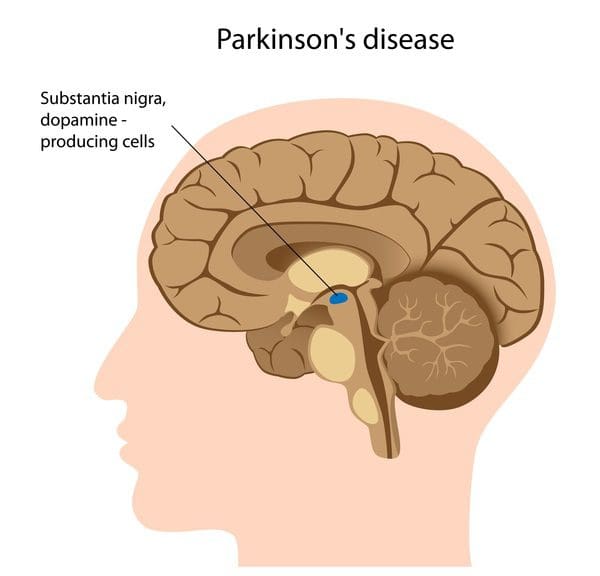
Do you often find yourself slurring your words? Have you been noticing you’ve constantly been slouching over, and it is affecting your posture? Or have you been dealing with stiffness in different muscle areas? If you have been experiencing any of these symptoms, it could correlate to the early signs of Parkinson’s disease. Studies reveal that Parkinson’s disease is a slow, progressive neurodegenerative disorder affecting about 1% of the world population over 60. This neurological disorder is common, and while it commonly affects men more than women, it causes the basal ganglia to deteriorate over time and causes numerous symptoms to affect the body’s motor function. Additional studies reveal that environmental influences like smoking and endocrine factors could potentially cause overlapping risk profiles that cause early development of Parkinson’s disease. Some of the symptoms that are most common with Parkinson’s disease include:
- Loss of motor function in the hands and feet
- Body Tremors when resting
- Muscle stiffness
- Unstable posture
- Unable to write, speak or swallow
- Sleep issues
- Cognitive dysfunction
- Urinary disturbances
These various symptoms cause body dysfunction in the multiple muscles and vital organs and can lead to overlapping risk issues that can mask Parkinson’s disease.
How Does Parkinson’s Affect The Body?
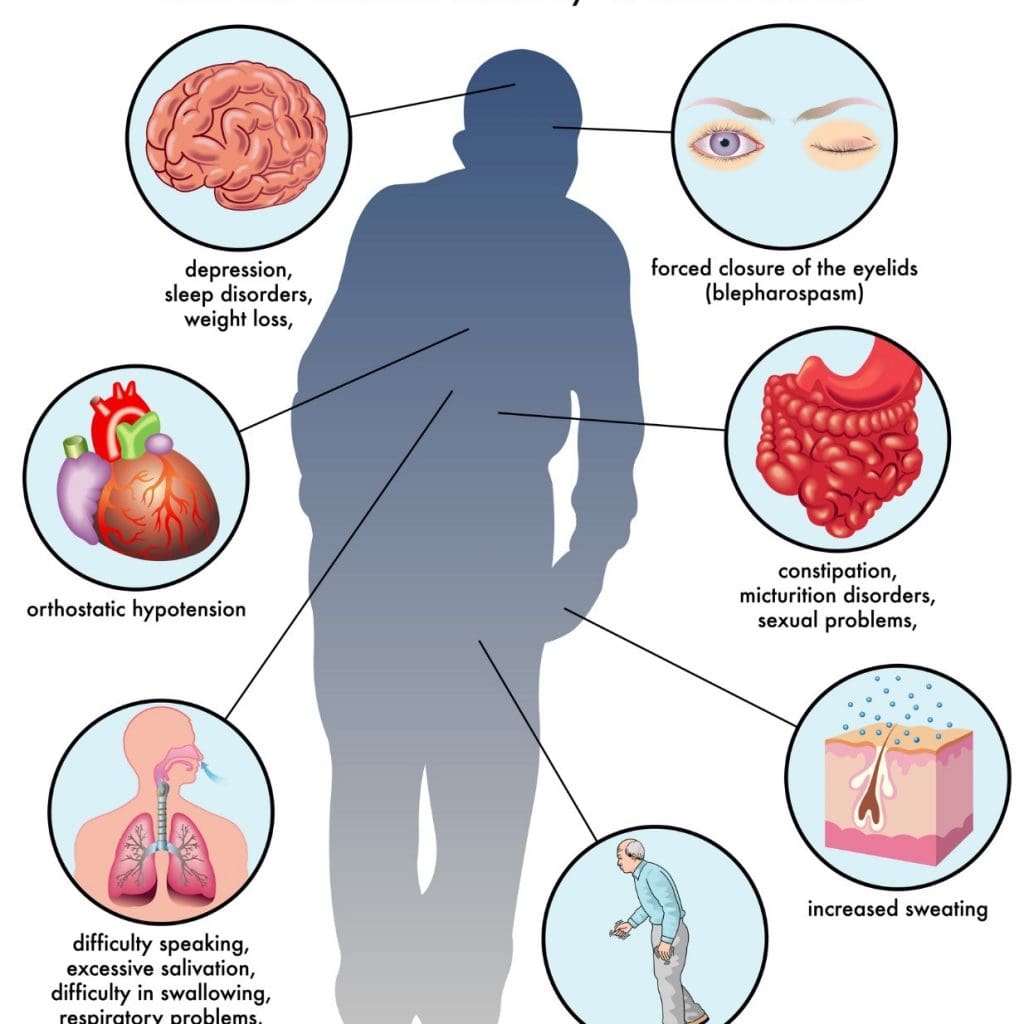
When Parkinson’s disease affects how the brain sends neuron signals to allow the body’s motor skills to function in each muscle group, the signs and symptoms can vary for each individual. Early symptoms are mild and go unnoticed. However, since Parkinson’s disease affects the body’s motor skills, muscle weakness fits in the symptoms associated with Parkinson’s. Studies reveal that Parkinson’s is a neurodegenerative disorder often characterized by different motor symptoms; a muscular deficiency could cause joint and muscle instability and torque. Muscular deficiency in the body could cause the brain to signal the immune system to send out inflammatory cytokines to the various muscles and vital organs and cause abnormality in the body, which then affects the gut-brain connection and leads to gut dysbiosis associated with muscle stiffness.
Understanding Parkinson’s Disease- Video
Have you been experiencing muscle weakness in different areas of your body? Do you feel constipated constantly? Or have you been dealing with cognitive issues affecting your quality of life? Many of these signs and symptoms are associated with a neurodegenerative disorder known as Parkinson’s disease. The video above explains what Parkinson’s disease is and how it affects the brain. Studies reveal that the association between the brain’s structure and Parkinson’s disease correlates to muscle deficiency in the body. Since Parkinson’s is a slow, progressive neurodegenerative disorder, one of the symptoms is muscle weakness. Muscle weakness does occur in the body when Parkinson’s disease starts to progress further and causes a deficit in the central activation of each muscle group. When this happens, numerous issues will begin to develop over time alongside Parkinson’s. On the bright side, there are various ways to slow the progression of Parkinson’s disease and restore the body’s functionality.
How To Manage Parkinson’s Disease Early

There are numerous ways that many individuals can slow the progression of Parkinson’s disease early on to prevent more issues from affecting the body’s motor skills. Getting enough exercise can help improve a person’s well-being and motor skills. Incorporating healthy foods and supplements that can improve brain function and reduce other symptoms like inflammation can help improve muscle and organ functionality. And finally, finding hobbies and setting boundaries can lower cortisol levels and decrease stress can be a positive impact on the brain; managing the progression of Parkinson’s can ensure a person’s well-being while making the brain from rewiring those neuron signals from going haywire.
Conclusion
Parkinson’s disease is a slow, progressive disorder that causes the brain’s basal ganglia to deteriorate and cause dysfunction in the body’s motor skills. When the brain’s neuron signals become haywire due to Parkinson’s, it can lead to muscle weakness in the body, and that can cause overlapping risk profiles in the body, causing more symptoms to mask Parkinson’s disease. Fortunately, there are numerous ways to slow the progression of Parkinson’s disease early on can reduce the symptoms of Parkinson’s:
- Eating nutritious food for the brain
- Exercising
- Being mindful
When people incorporate these techniques into their lifestyle, they can regain their quality of life.
References
Frazzitta, Giuseppe, et al. “Differences in Muscle Strength in Parkinsonian Patients Affected on the Right and Left Side.” PloS One, U.S. National Library of Medicine, 25 Mar. 2015, https://www.ncbi.nlm.nih.gov/pmc/articles/PMC4373899/.
Kouli, Antonina, et al. “Chapter 1:Parkinson’s Disease: Etiology, Neuropathology, and Pathogenesis.” In: Stoker TB, Greenland JC, Editors. Parkinson’s Disease: Pathogenesis and Clinical Aspects [Internet]. Brisbane (AU), Codon Publications, 21 Dec. 2018, https://www.ncbi.nlm.nih.gov/books/NBK536722/.
Zafar, Saman, and Sridhara S Yaddanapudi. “Parkinson Disease – Statpearls – NCBI Bookshelf.” In: StatPearls [Internet]. Treasure Island (FL), StatPearls Publishing, 8 Aug. 2022, https://www.ncbi.nlm.nih.gov/books/NBK470193/.